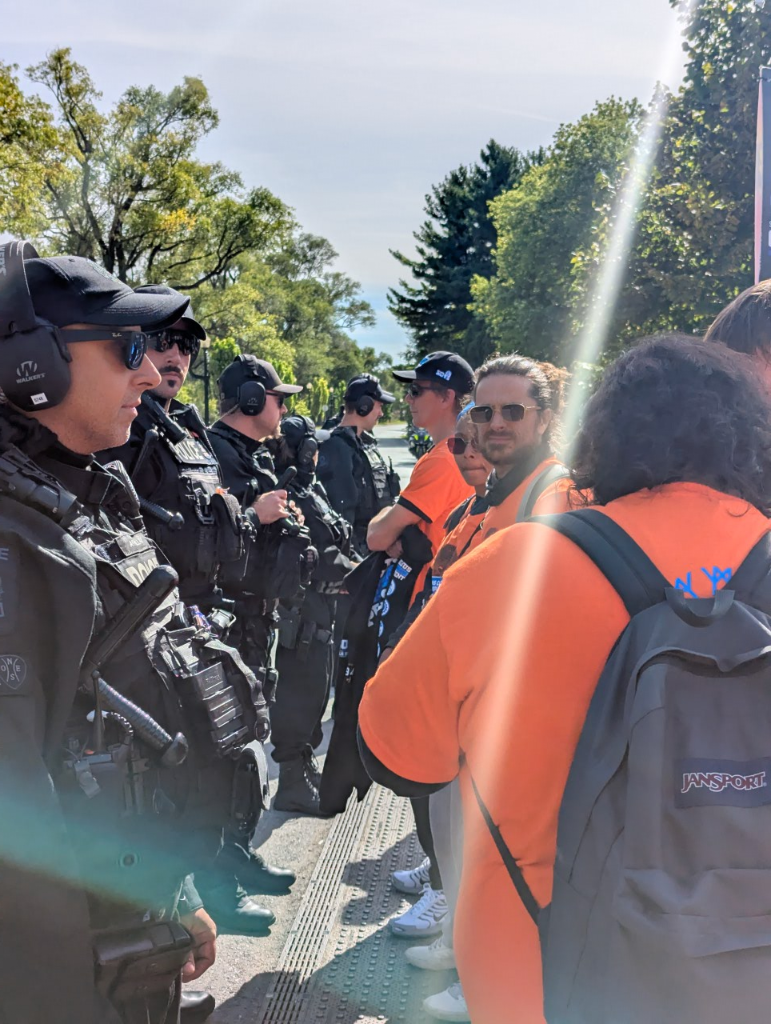
Blue-collar workers at Jean-Drapeau Park were on strike on September 21 to protest the disparaging offer made by the bosses.
Introduction
Blue-collar workers at Jean-Drapeau Park have been without a collective bargaining agreement since late 2023. Their wages have not increased since March 2020. Negotiations for the next agreement took nearly a year to begin, and a deal has only been on the table since this summer. Union members cite several reasons for this delay: meetings canceled because the employer allegedly failed to prepare, changes within the bargaining teams, vacations, and the implementation of an evaluation clause that requires in-depth and prolonged consultation.
A Long-Overdue Wage Adjustment
At the start of negotiations in spring 2024, union members had several demands, including a schedule offering better work-life balance and improved access to group health plans, which currently exclude many seasonal workers who do not have five years of seniority or who do not work during the winter. However, the members’ top priority remained wage catch-up.
Since signing the last collective bargaining agreement, rents in and around Montreal have doubled, and workers are facing massive daily increases in the prices of goods and services, with inflation exceeding 23% since 2020.
According to the Institute for Socioeconomic Research and Information (IRIS), in Montreal in 2026, a single person’s livable after-tax income will be $41,585—a 44.48% increase from 2021. As a result, many of our colleagues at Jean-Drapeau Park live in poverty, even while working full-time. Otherwise, to make ends meet, they must hold multiple jobs or work overtime.
Park employees are underpaid compared to their counterparts in the public sector. While housekeeping staff at Jean-Drapeau Park are paid $21.06 per hour—about $2,000 net per month—similar positions in schools, universities, public transit systems, and the City of Montreal have paid between $25 and $32 per hour for several years. This pay gap makes it difficult for the park to hire and retain housekeeping staff. In fact, several workers have reported that managers joke that they “they might deserve a one- or two-buck raise.”
We note that a similar pay gap exists for several other positions at the park.
Essential Work Disregarded by Management
We make it possible for Jean-Drapeau Park to host the major events whose success executives and management love to take credit for: the Grand Prix, the Osheaga Festival, and the World Cycling Championships. For these managers, their five- or six-figure salaries are the reward for this success. Yet all these events, meant to put Montreal on the international map, would project a very different image if the gardens weren’t maintained, the lawns weren’t mowed, the trash wasn’t collected, and the restrooms weren’t cleaned.
Our work makes countless weddings, Christmas parties, picnics with friends, family celebrations, and other joyful moments possible for Montrealers and tourists.
Recognition from management is limited to emails, hot dogs, and reusable water bottles—when they don’t simply ignore the contributions and skills of the park’s workers.
For example, a former maintenance colleague once noticed that certain tasks were being done too early in preparing the Paddocks for the F1 race. Constant turnover on site led to repetitive tasks that could be optimized with better planning. Consequently, this colleague prepared a document of about thirty pages to improve site preparation. He then shared it with his superiors, who completely ignored it. This colleague left his job shortly thereafter.
Similarly, the famous Mosaïcultures, which attract admiration and revenue from people around the world, were entrusted to our horticulture team without any training or instruction on how to maintain them. Our horticulturists learned to maintain the garden sculptures through trial and error, drawing on their creativity and at the cost of their sweat and blood. Management pressured them to make this multi-million-dollar investment pay off.
While the park director can take paid vacations to Monaco and Australia to attend Grand Prix races, our efforts deserve neither recognition nor rest. Blue-collar workers mostly work 10-hour shifts, with only 30 minutes set aside for an official break. Several colleagues report being verbally reprimanded by their supervisors for taking time to catch their breath or grab a coffee in the cafeteria in the morning.
The time is ripe to organize
Given these working conditions that are detrimental to the park’s blue-collar workers, how would you describe the state of our current negotiations?
Descriptive, to put it bluntly. Recently, the City interfered in our negotiations and pressured us to lower the employer’s offer, fearing that Montreal’s blue-collar workers might use our new wage conditions as a pretext to demand larger raises. Similarly, the Park timed its offer for the end of the season, when many seasonal blue-collar workers are laid off for several months. They waited until we were as demobilized as possible.
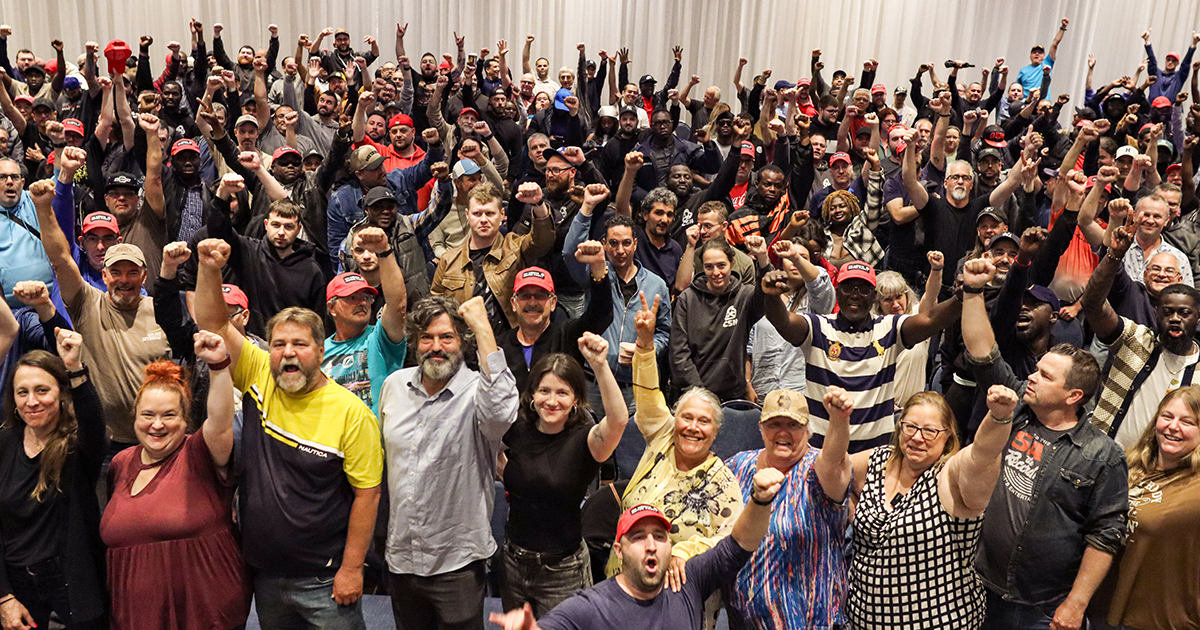
On September 14, nearly 300 blue-collar workers at the Park rejected management’s offer by more than 95 percent. Union leadership called for a one-day strike on September 21 in accordance with the wishes of the union members, who had voted for such a form of pressure earlier this year but whose enthusiasm had been dampened until then by the leadership.
Today, many of us want to wage a more aggressive union struggle. After all, our basic living conditions are at stake. Just as Montreal’s blue-collar workers play an essential role for the City, we play an essential role in the operation of Jean-Drapeau Park. It’s time we used our numbers and our power to make it clear to management that their scheming and contempt cannot continue. If the bosses stand united, the workers must too.
The struggle for better working conditions is not whining or greed—it is a struggle for human dignity. A struggle to care for our children, our bodies, and our minds, and to do our part for our society with pride. We all deserve to fulfill these aspirations, despite the bosses’ behaviour, attitudes, and statements to the contrary.
To all the workers reading this who are seeking the same thing: let’s fight together for a better future.