For the past few weeks, the Quebec Construction Commission (CCQ) has been running a campaign against intimidation and harassment on construction sites. Workers’ day-to-day experience quickly reveals the limits of this initiative: their precarious employment and dependence on their employer make it risky to demand the respect they are owed. The campaign ultimately runs up against the limits of power: who actually has the power to command respect on the job site? Views from a former health and safety representative.
Laws and regulations are all well and good—they’re nice—but if you’re too strict, the unfortunate reality is that you won’t be an HSR for very long.
An inspector from the CNESST
A formal campaign
Over the past few weeks, the Quebec Construction Commission (CCQ) has been running a campaign against intimidation and harassment on construction sites. We are told that toxic behaviour no longer has a place in the industry. We are encouraged to report it. We are told that it’s all about respect.
I have a story to tell that illustrates the hypocrisy behind the CCQ’s campaign.
For eight months, I worked as a Health and Safety Representative (HSR) on a construction site outside Montreal. My job, broadly speaking, was to identify hazards, listen to workers, and make recommendations whenever safety was being compromised.
Being an HSR: Facing the Hard Reality on the Ground
During my union training, I was encouraged to insist on equal representation at the site’s joint health and safety committee. Quebec’s Occupational Health and Safety Act requires that this committee, which meets every two weeks, include an equal number of workers and management representatives. It is not supposed to be just another meeting of bosses.
The company claimed that the workers simply didn’t want to participate. I repeatedly insisted that they fulfill their legal responsibilities: it is the principal contractor’s duty to ensure that the committee’s composition complies with the law at all times. I carefully reminded them of the applicable procedures and requirements. I explained that workers live with the risks every day and are therefore best positioned to propose solutions. I disturbed the hierarchy. I was trying to bring a measure of democracy into capitalism. For eight months, I continued to challenge management on this issue.
I saw how the system really works. I thought I was protected, but instead I came face to face with my own reality: the reality of those at the bottom of the ladder. As a CNESST inspector told me when I was first learning the job: “Laws and regulations are all well and good—they’re nice—but if you’re too strict, the unfortunate reality is that you won’t be an HSR for very long.”
Throughout my mandate, I was subjected to intimidation, threats, sexual harassment, and outright refusals to cooperate from foremen. Meetings were held. Commitments to mutual respect and cooperation were made. Then the refusals resumed.
Meanwhile, workers became increasingly reluctant to speak with me. Some avoided conversations altogether. Others preferred to keep their concerns to themselves. When workers believe that filing a complaint could cost them their job, silence often becomes a survival strategy.
Who can really earn respect? Power and system
When hazards stem from management decisions, or when the problems involve foremen or others in positions of authority, speaking up becomes much more complicated. That is the real problem.
The construction industry still operates largely on a system of precarity and dependency. Everyone knows they can be replaced overnight. Everyone knows that a reputation as a “troublemaker” can spread quickly. Everyone knows there is no job security and that it’s better not to upset the wrong people.
In that context, awareness campaigns have their limits. You can put up as many slogans as you want on construction fences. You can produce videos and posters. But as long as workers lack the real power to report abuses without fear of economic retaliation, intimidation will continue.
As an HSR, I was supposed to be one of the best-protected people on the site. Yet, after insisting on fulfilling my legal role, asserting my rights, and activating the available prevention mechanisms, my mandate came to an end. I found myself isolated, unable to carry out my responsibilities properly, and emotionally exhausted.
I am not telling this story simply to talk about myself. I am telling it because it exposes a fundamental contradiction. We are told to report abusive behaviour. But those who do so often find themselves isolated. We are told to respect one another. Yet the structures that allow people to defend their rights remain fragile. We are told prevention matters. But when a prevention representative becomes too inconvenient, they quickly discover the limits of the system.
For us, at the Autonomous Construction Caucus of Quebec, the issue is not merely one of individual respect. It is a question of power. Who controls the job site? Who makes the decisions? Who can speak without fear? Who can report wrongdoing without risking their livelihood?
Until workers have militant, democratic, and independent organizations capable of defending them collectively, awareness campaigns will do little more than treat the symptoms.
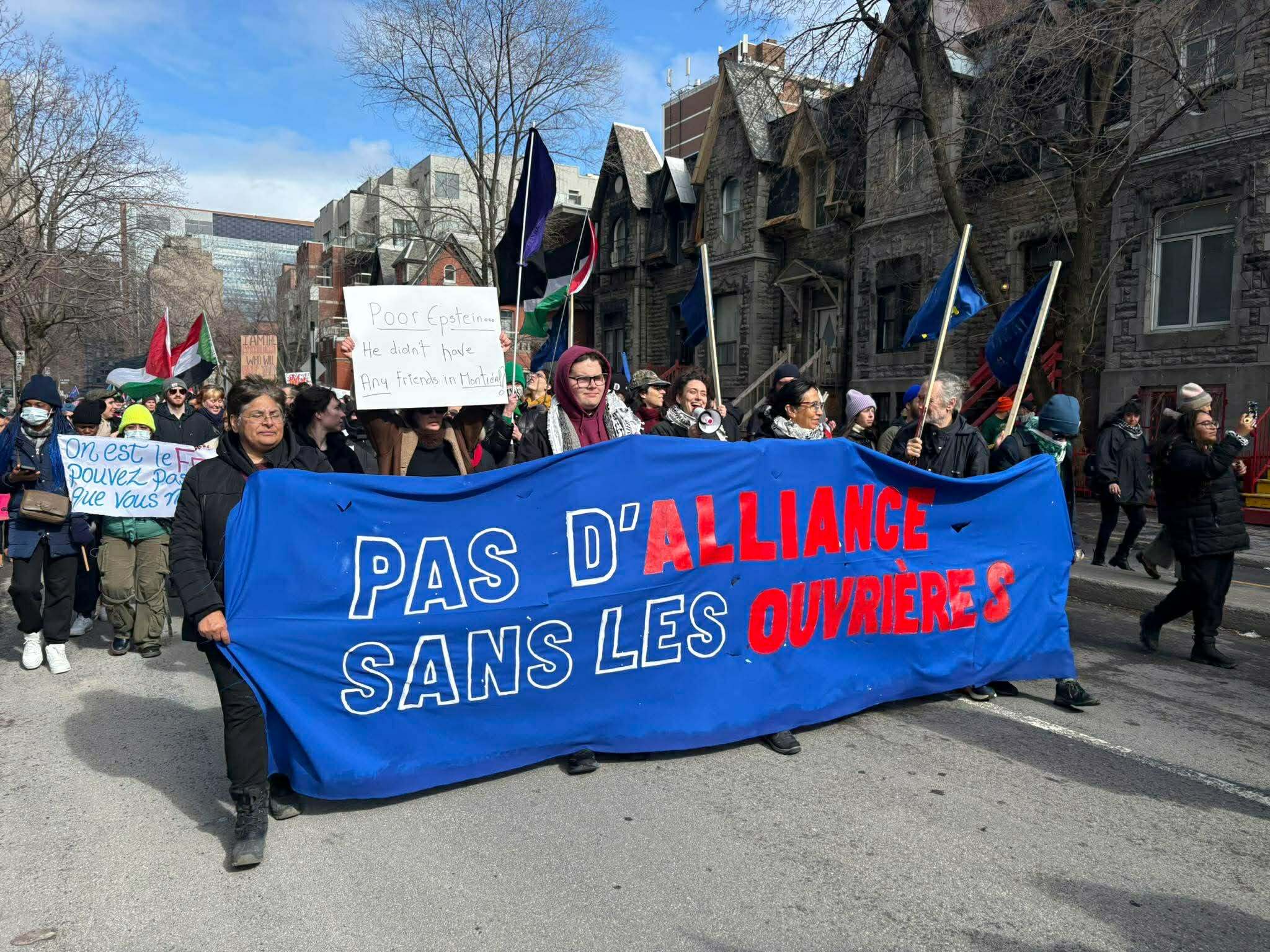
The problem is not simply intimidation. The problem is the system that continues to make intimidation effective. That is why, together with Workers’ Alliance (Alliance Ouvrière), we denounce the hypocrisy of the CCQ’s anti-intimidation campaign. Once again, we say it clearly: the CCQ must stop wasting our dues.